I absolutely love baking with lemon! Its tangy, bright flavour goes so well in cakes and tarts and the aroma of fresh lemon zest is unlike any other scent.
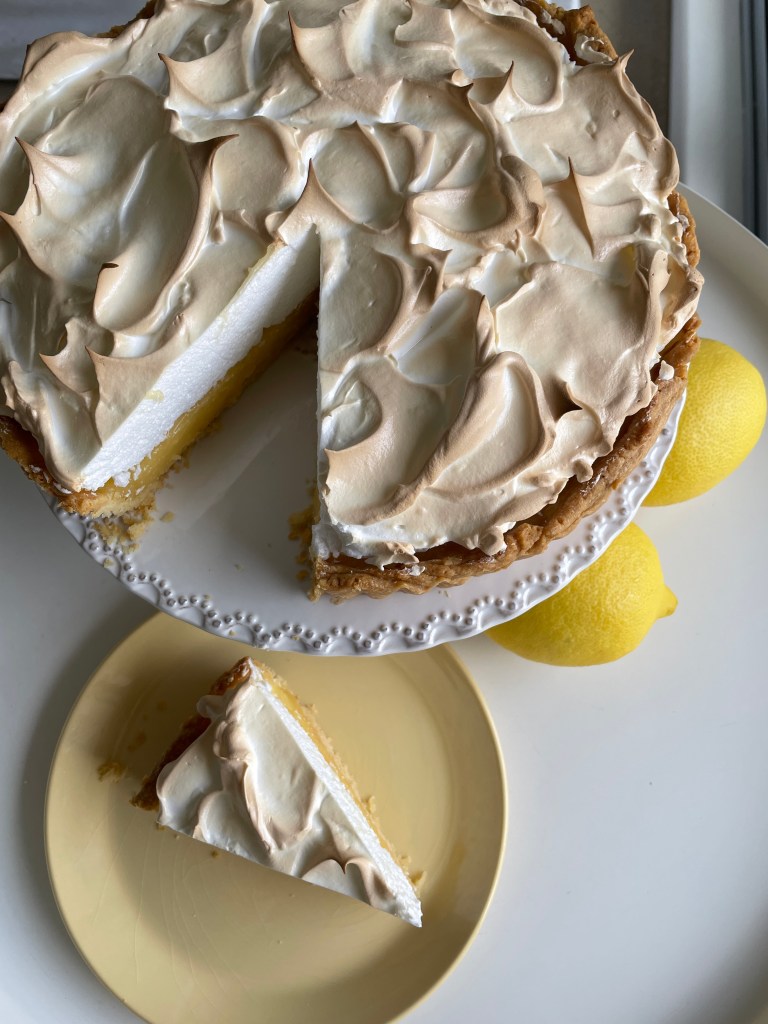
Buying and baking with lemons
When buying lemons, choose plump fruit with a bright yellow colour. Lemons with a green tinge are unripe, but can be easily ripened in the fruit bowl. Heavy lemons with thinner skin will yield more juice. I always keep a lemon or two in my fridge, a squeeze of lemon is great for brightening up savoury dishes and it also makes a very refreshing drink!
When baking with lemons there are two parts of the fruit that are commonly used: the zest (also known as the rind) and the juice.
If a recipe calls for zest or rind, it’s best to use a fine grater like a microplane so you don’t get tough, chunky bits of zest in your cakes. Aim to shave off the first layer of bright yellow rind only, and not the white pith underneath. The pith has a bitter taste and you want to avoid putting the pith in your cakes and tarts.
Juicers come in handy for recipes that require more than a couple of tablespoons of lemon juice. Don’t forget remove any pips before adding the juice to any mixture!
Today I’m sharing two of my favourite lemon recipes – an easy, crowd-pleasing cake and a showstopper dessert.
Lemon Olive Oil Bundt Cake
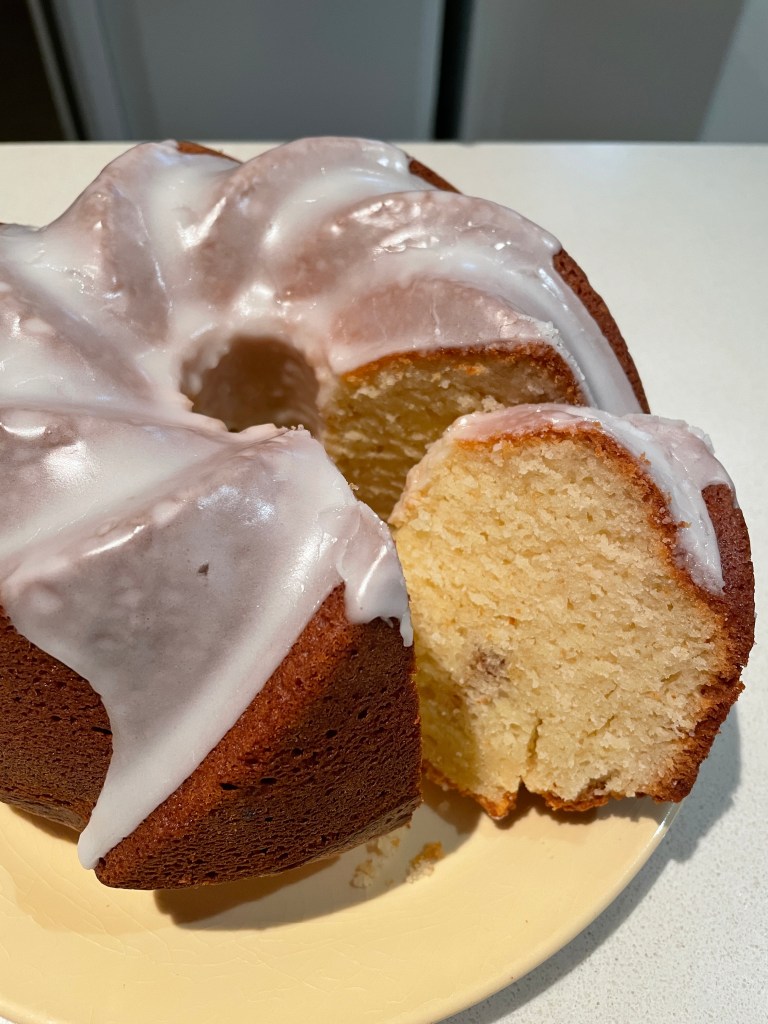
I discovered this recipe last week by The Italian Kitchen, which uses olive oil instead of butter and yoghurt in place of milk in the batter. This results in a tender cake that stays moist longer than usual compared to a traditional butter-based cake. You could even substitute the greek yoghurt with coconut yoghurt to make this cake dairy-free.
This is a great one-bowl recipe that’s easy to whip up and doesn’t require a stand mixer. It’s perfect for those days when you feel like baking but don’t have a lot of time on your hands!
I followed this recipe with a few tweaks:
- Reduced the amount of sugar to 1 2/3 cups
- Replaced the honey glaze with a simple lemon glaze made of 2 tablespoons lemon juice and 1.5 cups of icing sugar
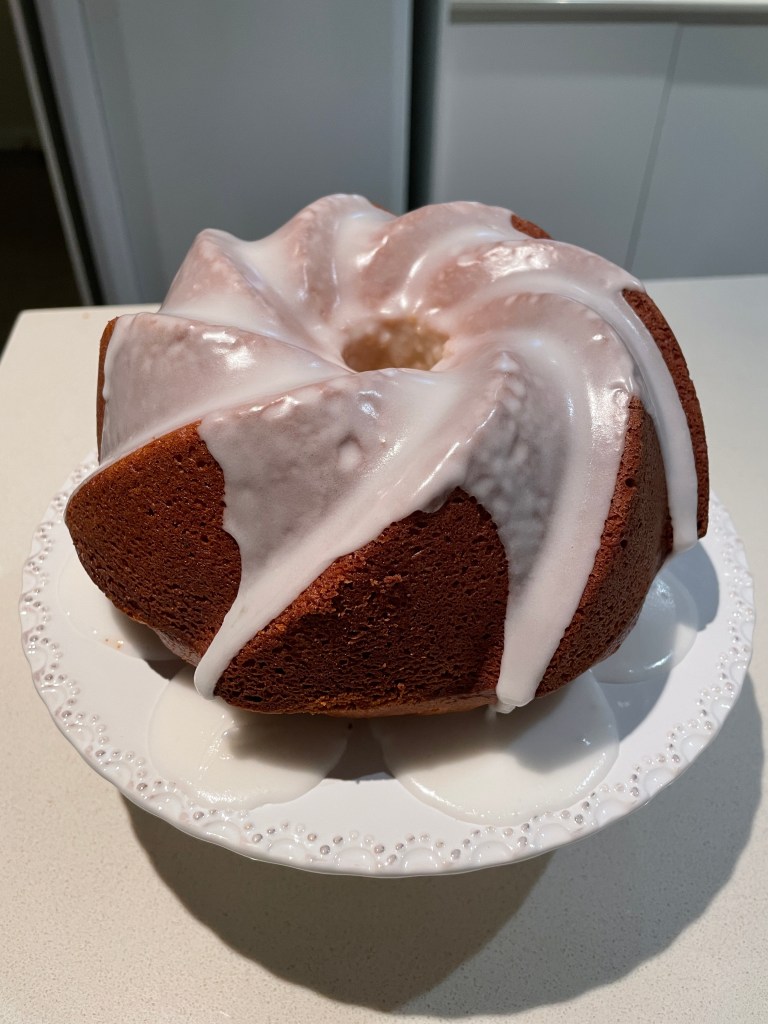
This cake looks beautiful once baked because of the bundt tin. Bundt tins have ring shape with a hole in the middle that ensures even baking. They usually have swirled or fluted patterns that give bundt cakes their signature look. The grooves imparted on the top of the cake look extra special when covered with a runny icing. My tin was a little too small for this recipe so the cake rose over the top of the tin and completely covered the ring in the middle! It didn’t matter too much once the cake was turned out, it still had that pretty swirl shape.
This is the kind of cake that’s delicious enjoyed just as it is for morning or afternoon tea, or any time of the day really. Next time you want to impress with a quick and easy cake, give it a try!
Recipe
This recipe is adapted from the recipe by The Italian Kitchen which you can find at this link.
Ingredients
- 2 ½ cups plain flour
- 1 teaspoon baking powder
- ½ teaspoon bicarbonate of soda
- ½ teaspoon salt
- 1 cup olive oil (not extra virgin)
- 1 2/3 cups caster sugar
- 4 eggs
- 1 teaspoon vanilla essence
- 1 large lemon, zested and juiced
- 1 cup greek yogurt or coconut yoghurt
- 2 tablespoons lemon juice
- 1 ½ cups icing sugar
Instructions
- Preheat oven to 180 degrees celsius. Grease a bundt tin with cooking spray.
- In a large bowl sift together the flour, baking powder, baking soda, and salt.
- In a separate large bowl, cream together the olive oil, sugar, eggs, vanilla, lemon juice and zest until well combined. You could also do this in a stand mixer.
- Add the yoghurt and flour mixture to the bowl with the oil and mix with a wooden spoon until combined.
- Pour the batter into to greased bundt pan and bake for 55-60 minutes, or until a toothpick inserted in the middle comes out clean. My cake took around 65-70 minutes as I used a smaller bundt tin.
- Cool the cake on a wire rack for 10 minutes, then remove from pan and cool completely.
- To make the icing, sift the icing sugar and combine with the lemon juice in a medium bowl until it forms a runny icing. Add more sugar if you want it to be a bit thicker, or more lemon juice if it’s too thick. Drizzle over the cake once cooled.
Lemon Meringue Pie
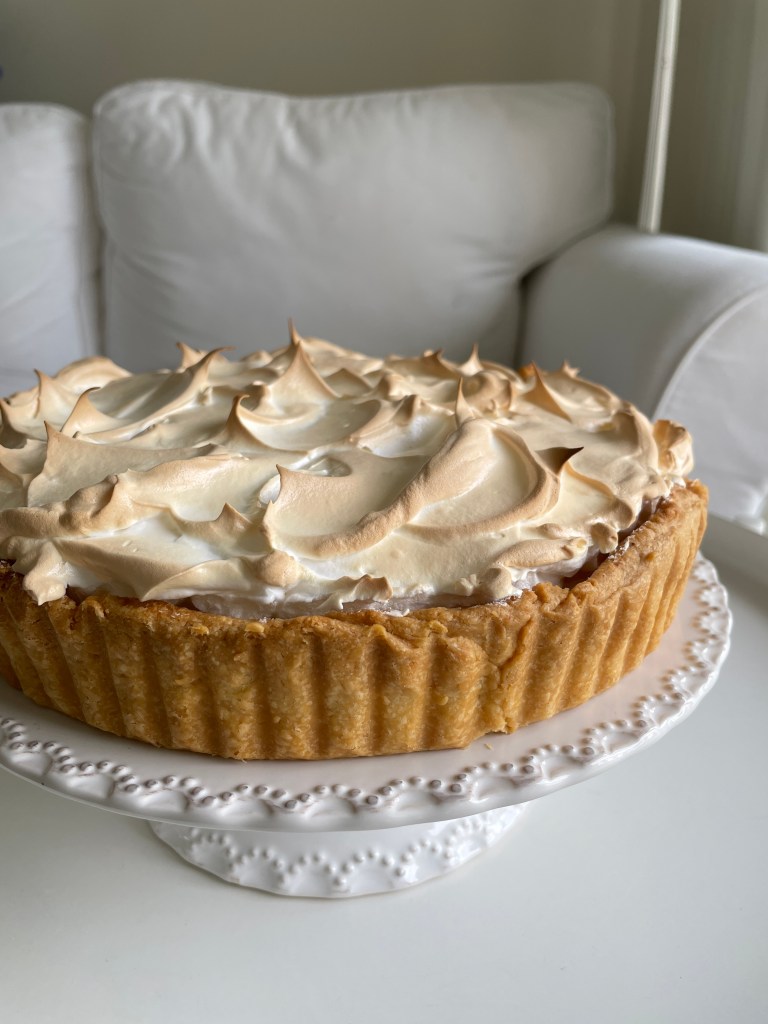
Lemon Meringue Pie is one of my favourite desserts to bake. The combination of fluffy meringue, tart lemon and crumbly, buttery pastry is a match made in heaven. Making the pastry from scratch requires a bit of labour and time, but it’s well worth the effort.
I use this recipe by Women’s Weekly and like to make this over two days. I’ll prepare the pastry and lemon curd the night before so all I have to do the next day is assemble and bake. This way, the recipe is more manageable and it doesn’t feel like I’m tackling lots of different elements at once. I also feel more relaxed spreading it out over two days.
The pastry is easy to make in a food processor – just pop in the ingredients and whiz until they come together. I like to shape the dough into a ball before wrapping it up so it’s easier to roll out into a circle and line the tart tin. When baking the pastry I’ll cook it until it’s a dark golden color; this imparts a lovely caramelised taste and ensures the crust stays crisp for longer. If your pastry looks a little too light, especially in the middle, pop it back in for another couple of minutes. This will save you from a soft, soggy pie crust later on.
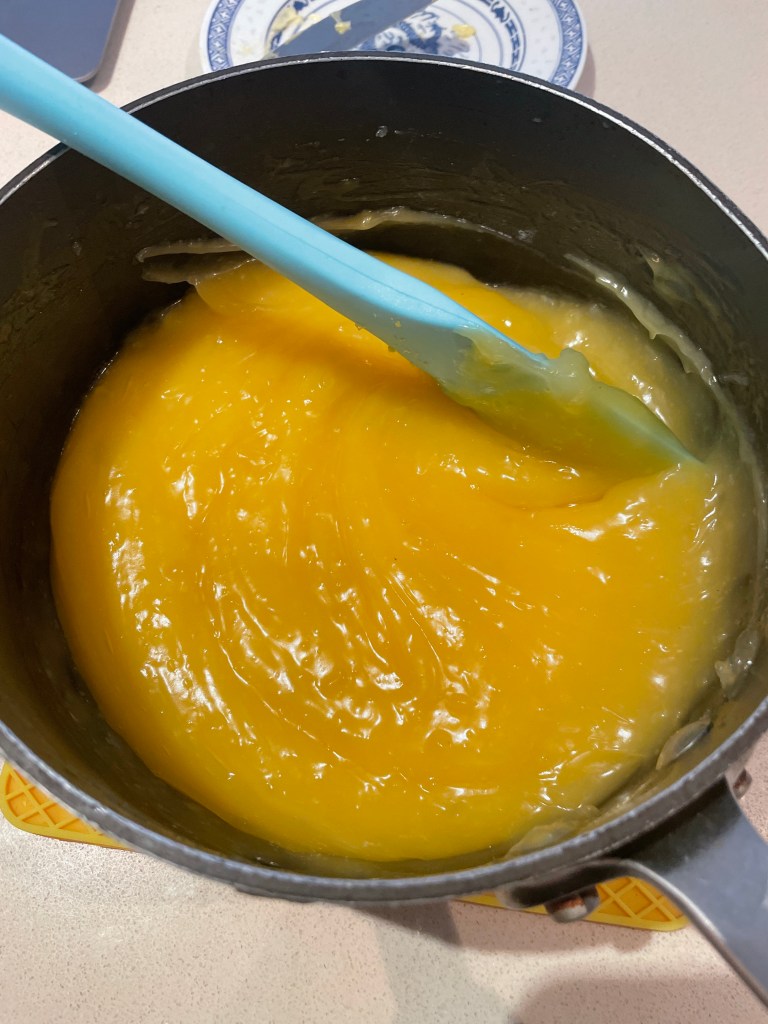
This curd is easy to tackle too as it’s all cooked in one pot on the stove. The cornflour, sugar, water and lemon juice mixture may look a little like gluggy glue at first, but once you add the egg yolks, rind and butter it will turn into a lovely, tangy curd. You don’t need to bake the curd, once cool it goes straight into the baked tart shell.
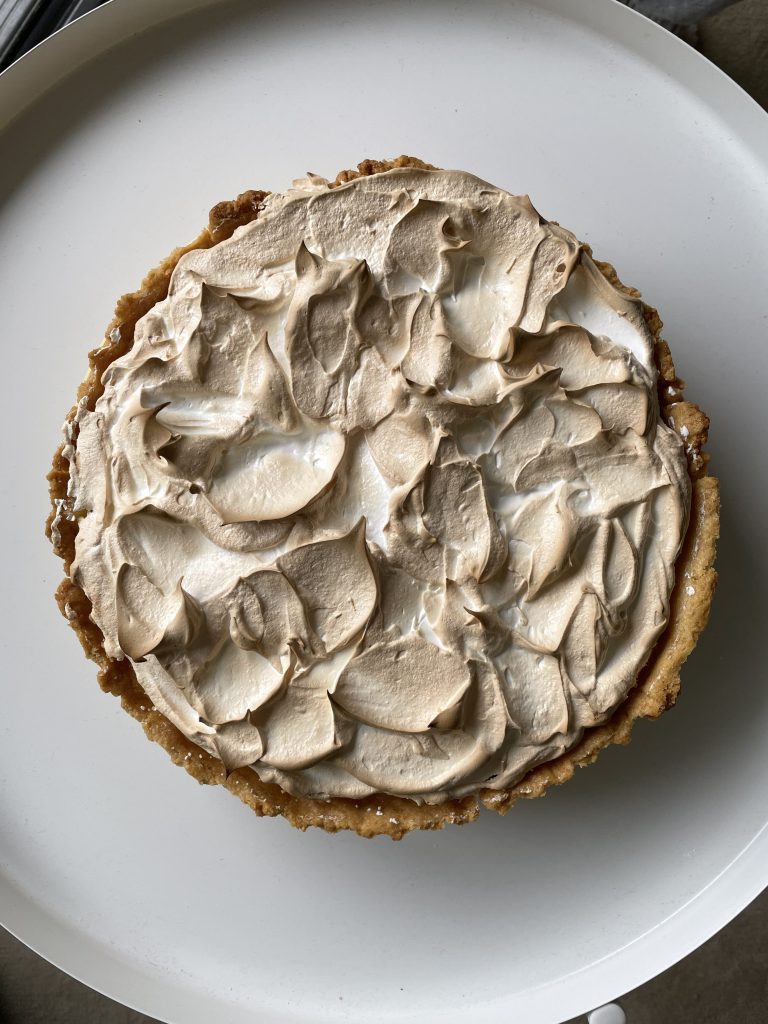
For the meringue it’s important to have fresh egg whites and a clean mixing bowl. Since the pastry uses one egg yolk I like to use the leftover white in the meringue so there’s 4 egg whites instead of 3 in the mixture. Who doesn’t love a little but of extra fluffy meringue? When transferring the meringue onto the lemon filling, use a spoon to create little swirls and pointy tips on top – these will darken in the oven and give the pie a lovely, rustic look.
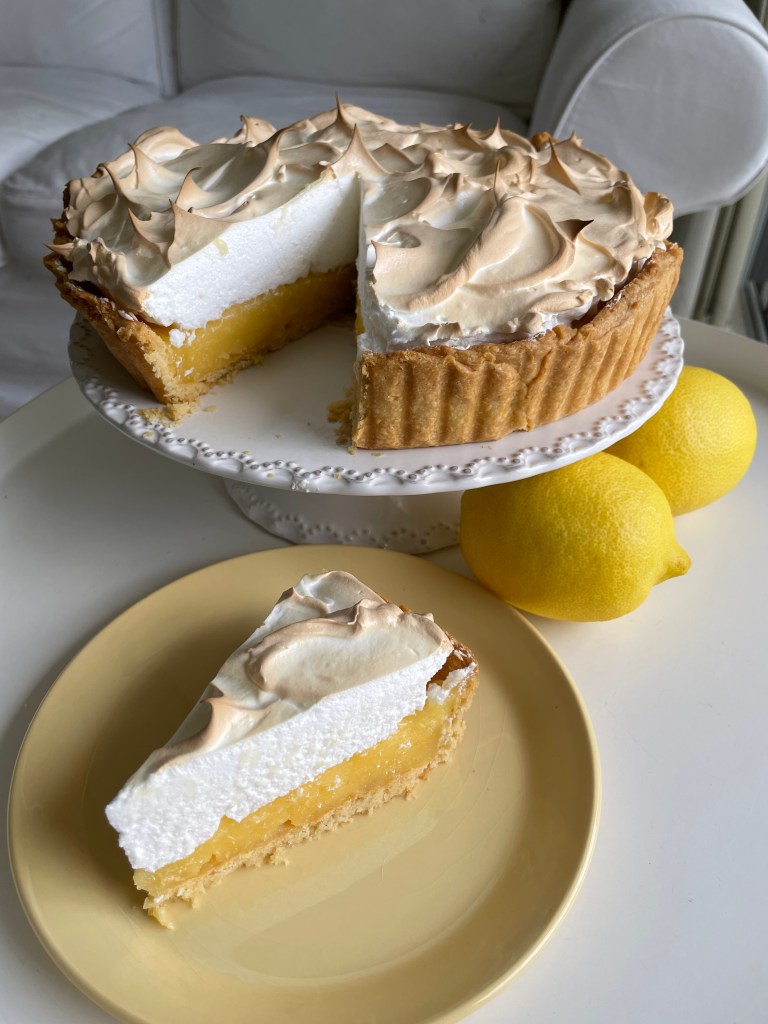
Recipe
This recipe is adapted from the recipe by The Women’s Weekly which you can find at this link.
Ingredients for pastry
- 1 1/2 cup (225g) plain flour
- 1 tablespoon icing sugar
- 140 gram cold butter, chopped into cubes
- 1 egg yolk
- 2 tablespoons cold water
Ingredients for lemon filling
- 1/2 cup (75g) cornflour
- 1 cup (220g) caster sugar
- 1/2 cup (125ml) lemon juice
- 1 1/4 cup (310ml) water
- 2 teaspoons finely grated lemon rind
- 80 gram unsalted butter, coarsely chopped
- 3 egg yolks
Ingredients for meringue
- 4 egg whites (3 from the lemon filling, 1 from the pastry)
- 1/2 cup (110g) caster sugar
Instructions
- If you wish to start making the pie night before, you can prepare the pastry and lemon filling. For the pastry, process the flour, icing sugar and butter until it looks like wet sand. Add the egg yolk and cold water to the food processor and whiz until the mixture forms a ball. Tip the pastry mixture onto a large piece of cling wrap, form into a ball, wrap and place in the fridge overnight (or for at least 30 minutes if making on the same day).
- For the lemon filling, add cornflour and caster sugar in a medium saucepan and gradually stir in juice and the water until smooth. Place on medium heat and stir until the mixture boils and thickens. Once it boils, simmer for 1 minute then remove from heat. Stir in the lemon rind, butter and egg yolks. Cool completely – this can be cooled, covered, in the fridge overnight if making the night before.
- When you are ready to bake the pie, grease a 24cm round loose-based fluted flan pan with cooking spray. Roll pastry between two sheets of baking paper until large enough to line pan. Transfer the pastry into the greased pan, then press the pastry into the sides and base. Pop lined tin in the fridge for 30 minutes to firm up.
- Preheat oven to 200 degrees celsius. Take the pastry out of the fridge and place on an oven tray (this will catch any excess pastry that falls over the edge). Place a sheet of baking paper over the pastry and fill the tin with dried beans or rice, then pop the tray into the oven and blind bake for 15 minutes. After 15 minutes, remove the paper and beans/rice then bake the pastry in the oven another 10 minutes or until golden. Turn the oven off and let the pastry case cool in the tin on the benchtop.
- Once the pastry is cool, spoon the prepared lemon filling into the pastry case and spread out evenly, ensuring the entire base is covered and going into all of the edges.
- Now it’s time to prepare the meringue that goes on top of the pie. Preheat oven to 220 degrees celsius. While the oven is preheating, beat the egg whites in a bowl with an electric mixer until soft peaks form. After soft peaks, gradually add the caster sugar sugar and beat until sugar dissolves and the meringue forms stiff peaks.
- Spread the meringue on top of the lemon filling and bake for around 2-5 minutes or until the meringue is browned lightly or to your desire. Take out of the oven, leave for 30 minutes to cool and enjoy!
These are my two favourite lemon recipes at the moment, leave a comment below if you try them or want to share your favourites lemon recipes with me!
For more seasonal cooking inspiration, check out my other Seasonal Cooking Project posts here.
 Maddie Loves Food
Yum, I love lemon!
LikeLike
Me too! 🙂
LikeLike
Thank you for sharing!
LikeLike
Thanks for reading Olivia! 🙂
LikeLike
Obviously missing something, Maddie. Where are the recipes.
LikeLike
Hi Mary! The links to the recipes are in the post and I’ve updated it to add the adapted recipes now!
LikeLiked by 1 person
My boyfriend loves citrus and tangy desserts so I’ll definitely check out your recipes! Thanks so much^^
LikeLike
Thanks for your comment Cathy, enjoy!
LikeLike